A leaking power steering hose needs the right replacement, not a generic line. Choosing a power steering hose kit in Australia means matching it to your vehicle’s original equipment specifications. Fluid leaks and stiff steering can indicate a hose fault, while the hose type determines whether it can handle pressure from the pump.
It’s easy to focus on the visible leak, but the replacement must also have the correct routing, fittings and connection points. A mismatch can prevent proper installation or affect steering operation.
This guide explains how to spot hose problems, what high-pressure hoses do and how to compare a replacement with OEM specifications. You’ll also learn which details help identify the right parts, so you can make an informed choice before replacing a damaged hose.
Key Takeaways
- Inspect the hose and nearby connections for signs of fluid leakage, and note any change in steering effort.
- Distinguish the high-pressure hose from the return hose before selecting a replacement.
- Match the replacement hose’s routing, fittings and connection points to the vehicle’s OEM specifications.
- Use the vehicle details and original hose information to narrow down the correct steering and suspension parts.
Diagnosing hose leaks and stiff steering
Start by checking the hose connections. Look for fresh power steering fluid around the pump, hose crimps, unions and steering rack. A wet patch can indicate the leak area, but fluid may travel along components before dripping. Trace the hose route and inspect its full length for cracks, bulges, abrasion or damaged fittings. Compare the pressure and return hoses: they have different roles and aren’t interchangeable.
Stiff steering is another clue. If steering effort changes alongside a fluid leak, a hose fault could be reducing fluid supply to the steering system. Stiffness alone doesn’t identify the failed part. Check the pump, hose connections and rack for leaks before choosing a replacement. Record the vehicle’s make, model, year and engine details, then compare the damaged hose’s shape and connections with the replacement listing.
How much does a power steering hose kit cost in Australia? Prices depend on which hose or hoses the vehicle needs. These are component prices, not a universal kit price.
- Note whether the leak is on the pressure or return hose.
- Photograph the hose route and fittings before removal.
- Record vehicle details and any part number printed on the hose.
- Match the replacement’s connections and routing to the original specification.
These checks can help narrow down the fault and replacement type. If the steering remains stiff after you identify a hose leak, the pump, rack or another steering component could also need attention.
High-pressure power steering hoses
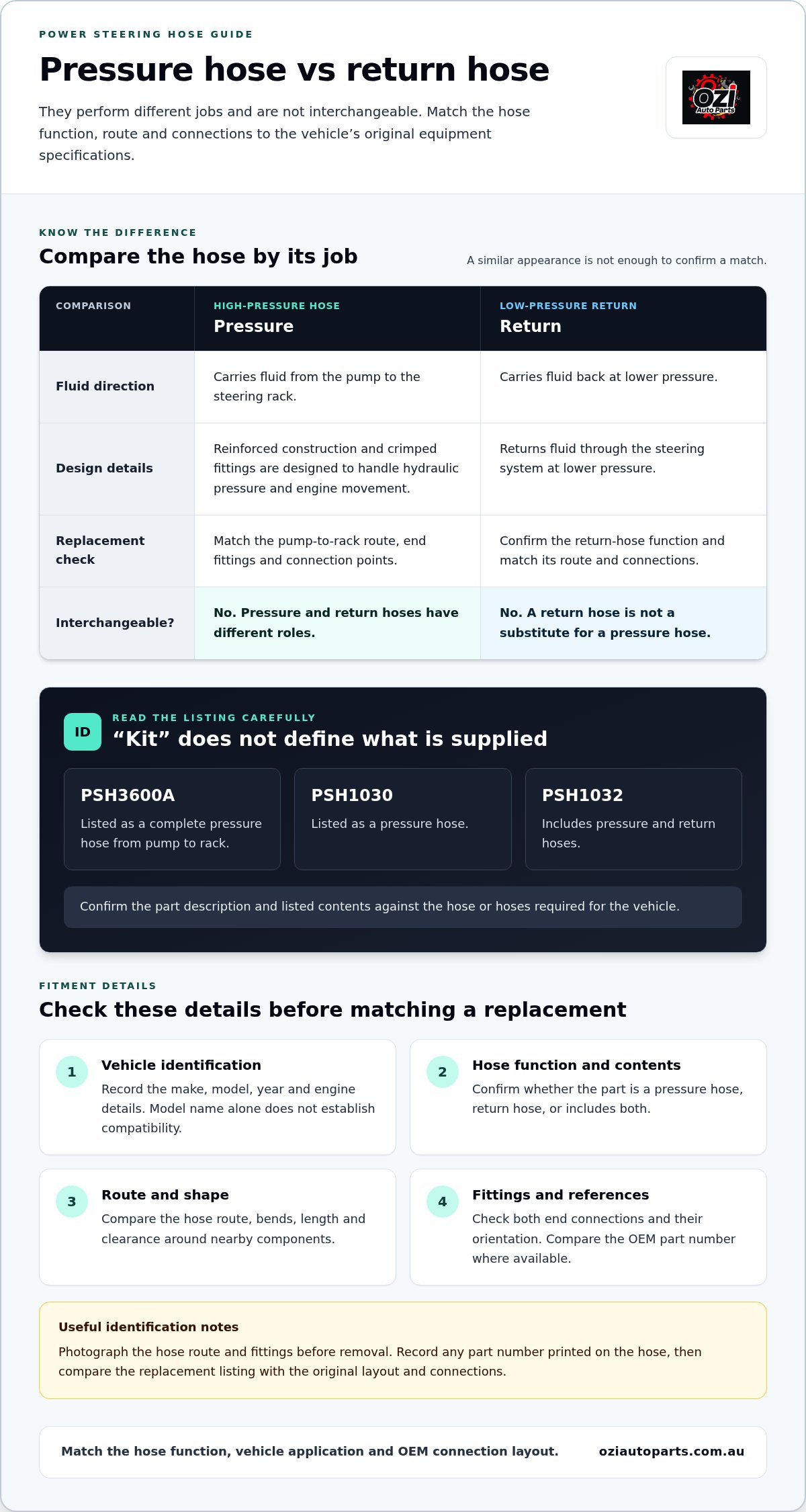
The high-pressure hose carries fluid from the pump to the steering rack. Its reinforced construction and crimped fittings are designed to handle hydraulic pressure and engine movement. A return hose carries fluid back at lower pressure, so the two types aren’t interchangeable. The replacement must match the original hose’s route, end fittings and connection points.
Part descriptions can clarify what’s being replaced. PSH3600A is listed as a complete pressure hose from pump to rack. PSH1030 is a pressure hose, while PSH1032 includes pressure and return hoses. These examples show why the word “kit” alone doesn’t identify the parts supplied. Compare the part description and vehicle application before selecting a replacement.
For a Nissan X-Trail, Lexus RX330 or LDV T60, identify the exact vehicle details before matching a hose. Model name alone doesn’t establish compatibility. Record the year, engine and any relevant trim or steering-system details. Then compare the replacement listing with the vehicle’s original hose layout and fittings. Different applications can require different hose shapes and connection ends.
- Pressure or return: Match the hose function, not just its overall appearance.
- Routing: Compare bends, length and clearance around nearby components.
- Fittings: Check connection style and orientation at both ends.
- Kit contents: Confirm whether the description covers one hose or pressure and return hoses.
Use those details to narrow the correct power steering and steering parts for the vehicle. A pressure hose that matches the application and connection layout is essential for a direct replacement.
Hose replacement and OEM specifications
A power steering hose kit doesn’t have one standard set of contents. The listing determines whether it includes a pressure hose, return hose, fittings or both hoses. For example, PSH1032 includes pressure and return hoses. Compare the listed contents with the components required for your vehicle before ordering.
OEM specifications help identify the right replacement. Use the vehicle’s make, model, year and engine details, then compare the original hose’s shape, fittings and connection orientation. Check whether it runs from the pump to the rack or returns fluid to the reservoir. A matching part number is another useful reference. Similar-looking hoses can have different routes or connections.
Can power steering hoses be custom-made or repaired in Australia? Custom fabrication or repair may suit some damaged hoses. Any replacement still needs to meet the system’s pressure requirements and match its fittings and routing. A catalogue replacement is another option, matched to the vehicle application and OEM details.
Do Australian power steering hose kits have warranties or fitment guarantees? Warranty and fitment terms vary by product and seller. Read the terms for the selected part, and match its stated vehicle application before purchase.
- Record the vehicle identification and engine details.
- Compare the OEM part number with the replacement listing.
- Check hose function, routing, fittings and connection orientation.
- Confirm the kit contents cover the hose or hoses required.
- Review the product’s warranty and fitment terms.
Use those details to narrow down power steering parts in the online catalogue and select a replacement against the vehicle’s OEM requirements.
Ozi Auto Parts: Brake System Parts
Ozi Auto Parts supplies power steering, steering and suspension parts for Australian vehicles. Explore its range once you’ve identified the hose or steering component you need. Compare the part application with your vehicle details and the original component before ordering.
The wider range also includes Brake System Parts, Driveshafts and 4WD Upgrade Parts. These categories serve different vehicle needs, while power steering and steering parts are the relevant starting points for a hose replacement. Keep the vehicle’s make, model, year and engine details handy when narrowing down a part. Match hose function, routing and connection points against OEM specifications to reduce the risk of selecting an incorrect component.
For a steering parts enquiry, contact Ozi Auto Parts with your vehicle details and the hose information you’ve gathered.
Make the next replacement decision count
Keep accurate vehicle and parts records when replacing a hose. Note the vehicle details, hose part number and any differences between the old hose and its replacement. This record can make future steering system maintenance more straightforward.
Choosing a power steering hose kit for an Australian vehicle starts with the correct application, not a visual guess. Keep the OEM reference and hose details together when preparing to order. This helps you focus on the component specified for your vehicle.
For the next step, contact Ozi Auto Parts about hose kits. Share the vehicle and part details you’ve gathered to support your parts enquiry. With the right information ready, you can move towards a more confident replacement selection.
Frequently Asked Questions
Which power steering hose kits fit popular Australian car models?
There isn’t one universal kit for popular models. For example, a Toyota Hilux hose listing needs to match the vehicle’s generation and engine configuration. Use the VIN or build information to identify the variant, then select a listing that names that application. A shared model badge alone doesn’t mean two vehicles use the same hose kit.
How do I find the correct power steering hose kit for my vehicle?
Use the VIN to identify the vehicle’s exact production variant in a parts catalogue. Check the build plate if the VIN lookup doesn’t clearly show production details. Keep the catalogue result and the vehicle’s original parts documentation together while comparing options. This helps distinguish vehicles that share a model name but have different configurations.
How do I replace a power steering hose and install a hose kit?
Follow the vehicle’s service procedure for the specific hose. Prepare a drain tray, remove relevant underbody covers if required, and follow the manual’s instructions for releasing the connections. Install the replacement without twisting or stretching it. Use the specified torque values, then follow the vehicle’s bleeding procedure and inspect the connections for leaks.
What tools and fluid are needed to replace power steering hoses?
Prepare flare-nut spanners for hose unions, standard sockets for access panels, a torque wrench for specified fasteners, and a drain tray for fluid. Keep clean, lint-free cloths nearby. Use only the fluid specification in the vehicle handbook or service information. The required spanner sizes and access tools depend on the vehicle’s fittings and layout.
What are the signs of a leaking or failing power steering hose?
A reservoir that repeatedly needs topping up can indicate fluid loss, even if there’s no puddle beneath the vehicle. Listen for a new groan or whine while turning the steering wheel, and note whether the sound changes with steering input. These clues point to a system concern, but don’t prove that the hose is the cause.