Fitment comes first; clutch capacity comes second. Choosing a performance clutch kit in Australia means matching the kit to your vehicle’s exact specifications, engine setup and intended use. The right upgrade balances engagement, drivability and the torque the clutch must handle.
More clamping force isn’t automatically better for a road-driven vehicle. The right choice depends on how the vehicle is built and driven. Compare fitment details, driving feel and the kit’s intended application before choosing. This gives you a practical way to narrow the options without relying on performance claims alone.
Key Takeaways
- Match the clutch kit to your vehicle’s exact specifications before comparing performance options.
- Assess your engine setup and driving conditions to choose a clutch suited to the load it needs to handle.
- Compare engagement and drivability, not just clamping force, when weighing upgrade options.
- Use vehicle fitment details to narrow your parts selection and avoid choosing by performance claims alone.
Performance clutch kit australia
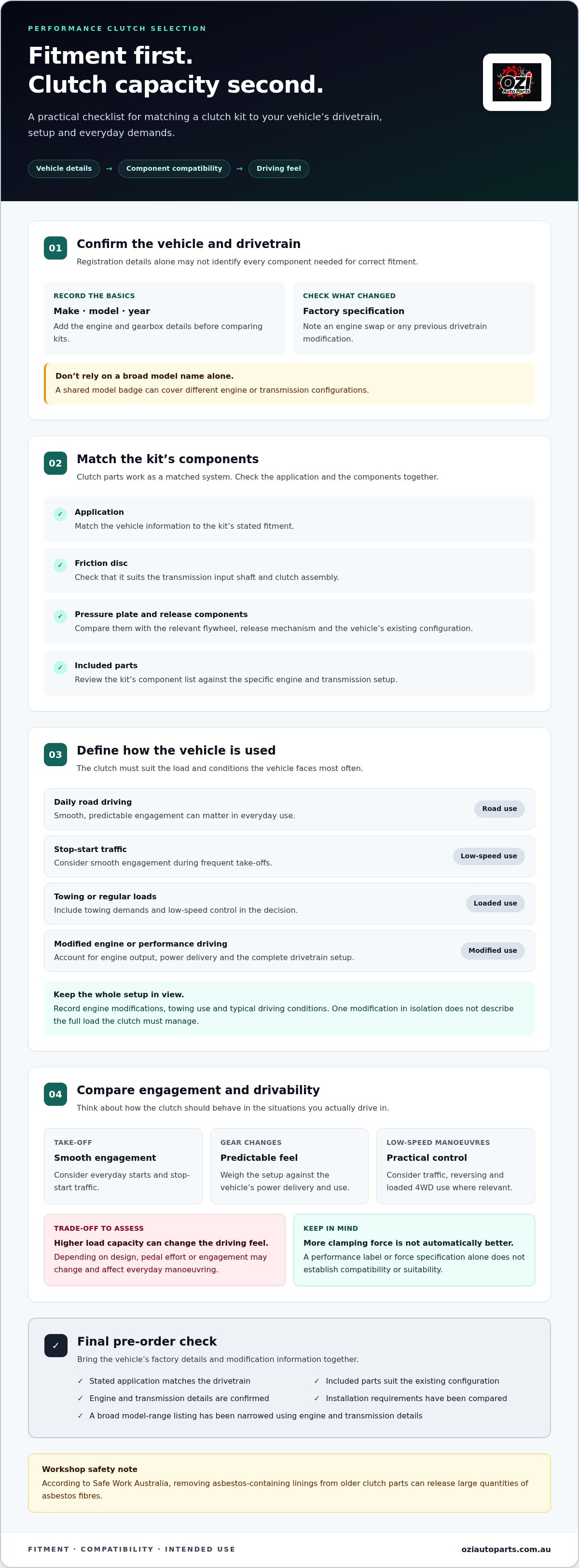
Choose a clutch kit by vehicle fitment first, then by how the vehicle is driven. For a performance clutch kit in Australia, registration details alone may not identify every relevant component. Model year, engine, transmission and factory specification can all affect fitment. An engine swap or previous drivetrain modification adds another variable. Start with the vehicle’s exact make, model, year, engine and gearbox, then use those details to narrow the application before comparing clutch materials or performance claims.
Next, establish the vehicle’s operating conditions. A standard road car, a modified vehicle and a regularly loaded 4WD place different demands on the clutch. Record engine modifications, towing use and typical driving conditions. For example, frequent stop-start traffic makes smooth engagement a practical priority. A vehicle used for performance driving needs a setup suited to its power delivery and operating demands. More clamping force alone does not establish that a kit is the right choice.
Use this sequence to compare fitment and intended use:
- Identify the drivetrain. Record the engine and transmission details, including any changes from the factory configuration.
- Confirm the application. Match the vehicle information to the kit’s stated fitment, rather than relying on a broad model name alone.
- Review component compatibility. Compare the friction disc, pressure plate and release components required for the specific setup.
- Define the use case. Separate daily driving, towing, modified-engine use and performance driving. Prioritise the conditions the vehicle faces most often.
- Compare engagement needs. Consider how the clutch should behave during take-off, gear changes and low-speed manoeuvres.
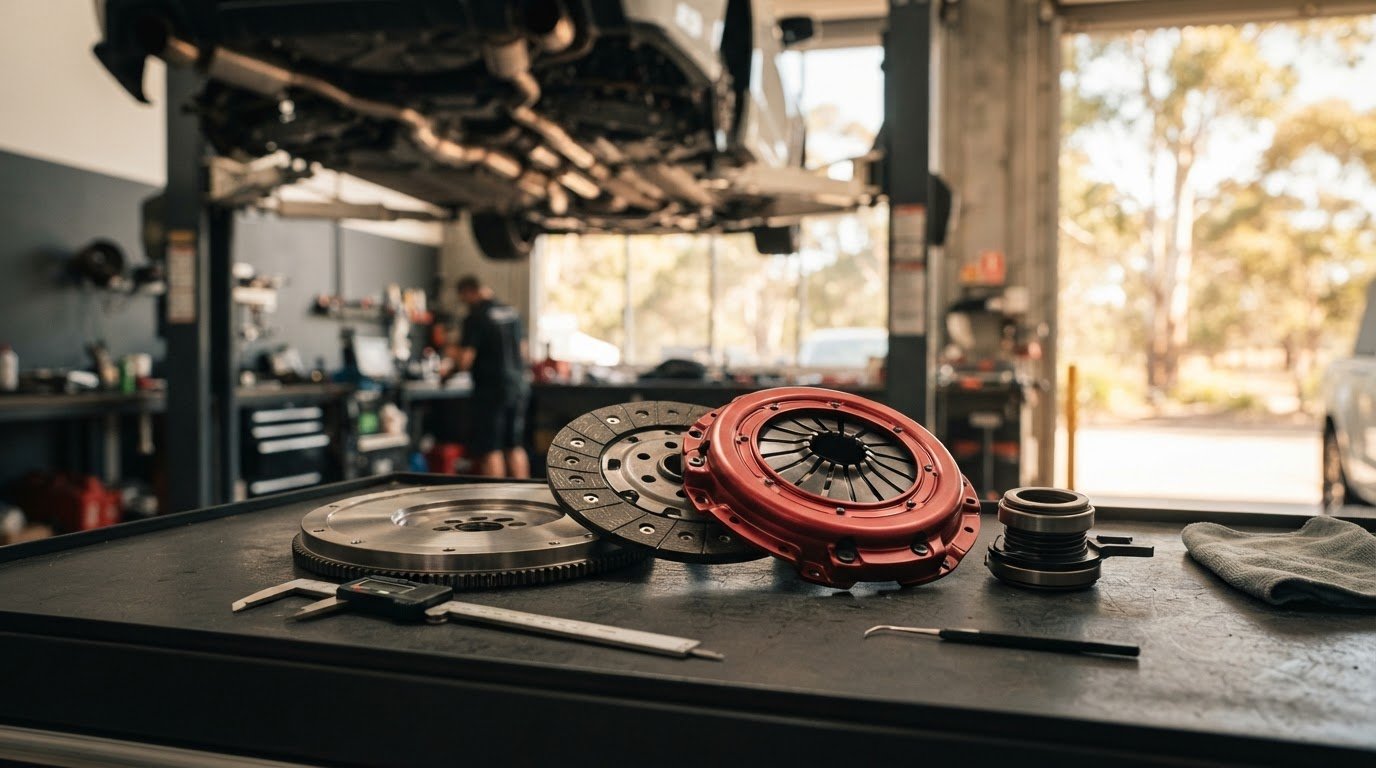
Compatibility matters because clutch parts work as a matched system. The disc must suit the transmission input shaft and clutch assembly. The pressure plate must work with the relevant flywheel and release mechanism. Check which components the kit includes, then compare them with the vehicle’s existing configuration. Even a kit listed for a particular model may need closer matching if the vehicle has a different engine or transmission.
Driving feel is another key factor. A clutch designed for higher load capacity may change pedal effort or engagement, depending on its design. That can affect everyday manoeuvring, particularly in traffic or when reversing. Consider this trade-off before choosing a more aggressive setup. In a road-driven vehicle, predictable engagement may be more useful than a specification chosen solely for maximum performance.
For modified vehicles, include the engine and drivetrain changes in the fitment decision. Increased engine output changes the load the clutch must manage. The relevant choice depends on the complete setup, not one modification in isolation. For a 4WD used with a load, towing demands and low-speed control also shape the choice. Avoid assuming that a clutch selected for one vehicle configuration will suit another with a different engine, gearbox or use pattern.
Before ordering, compare the stated application, included parts and installation requirements with your vehicle. Keep the factory details and modification information together. If the fitment description covers only a model range, narrow it down using the engine and transmission details. This helps avoid choosing a kit based on a shared model badge when the drivetrain differs.
In Australia, consumer guarantees cannot be replaced, limited or removed by an agreement, contract or warranty, according to the Australian Competition and Consumer Commission. This does not replace careful fitment selection. Keep purchase records and product information with the vehicle’s service documents. If clutch work involves older components, note that removing asbestos-containing linings from clutch parts can release large quantities of asbestos fibres, according to Safe Work Australia.
Use fitment, vehicle setup and driving conditions to guide your decision. Match the kit to the drivetrain, then weigh its engagement behaviour against the vehicle’s actual use. A performance label alone does not establish compatibility or suitability. Check the component list and application details together.
Ozi Auto Parts: Brake System Parts
Ozi Auto Parts supplies Brake System Parts for drivers sourcing mechanical components alongside a broader vehicle upgrade. Once you’ve assessed clutch fitment and driving requirements, consider how related systems support the vehicle’s intended use. For a 4WD setup, Ozi Auto Parts also offers 4WD Upgrade Parts, Driveshafts, and Steering and Suspension Parts.
These parts serve different areas of the vehicle. Brake components support the braking system, while driveshafts transfer power through the drivetrain. Steering and suspension parts affect vehicle control and ride behaviour. Match each component to the vehicle and planned upgrade, rather than treating one part as a complete vehicle solution.
For parts information, contact Ozi Auto Parts or visit oziautoparts.com.au.
Make the next parts decision with confidence
Before ordering, bring together your vehicle’s factory details and modification information. Use them to assess the parts needed for the complete drivetrain, not just the clutch assembly. This makes future upgrades easier to plan and keeps fitment decisions consistent as the vehicle changes. Choose a performance clutch kit in Australia for your vehicle’s actual configuration and use, not its upgrade label alone.
Ozi Auto Parts can help with related mechanical parts for your vehicle. Set out the component you need and the vehicle details behind the decision. Then take the next step: contact Ozi Auto Parts to discuss your parts requirements. A clear fitment brief gives you a stronger starting point for your next upgrade.