
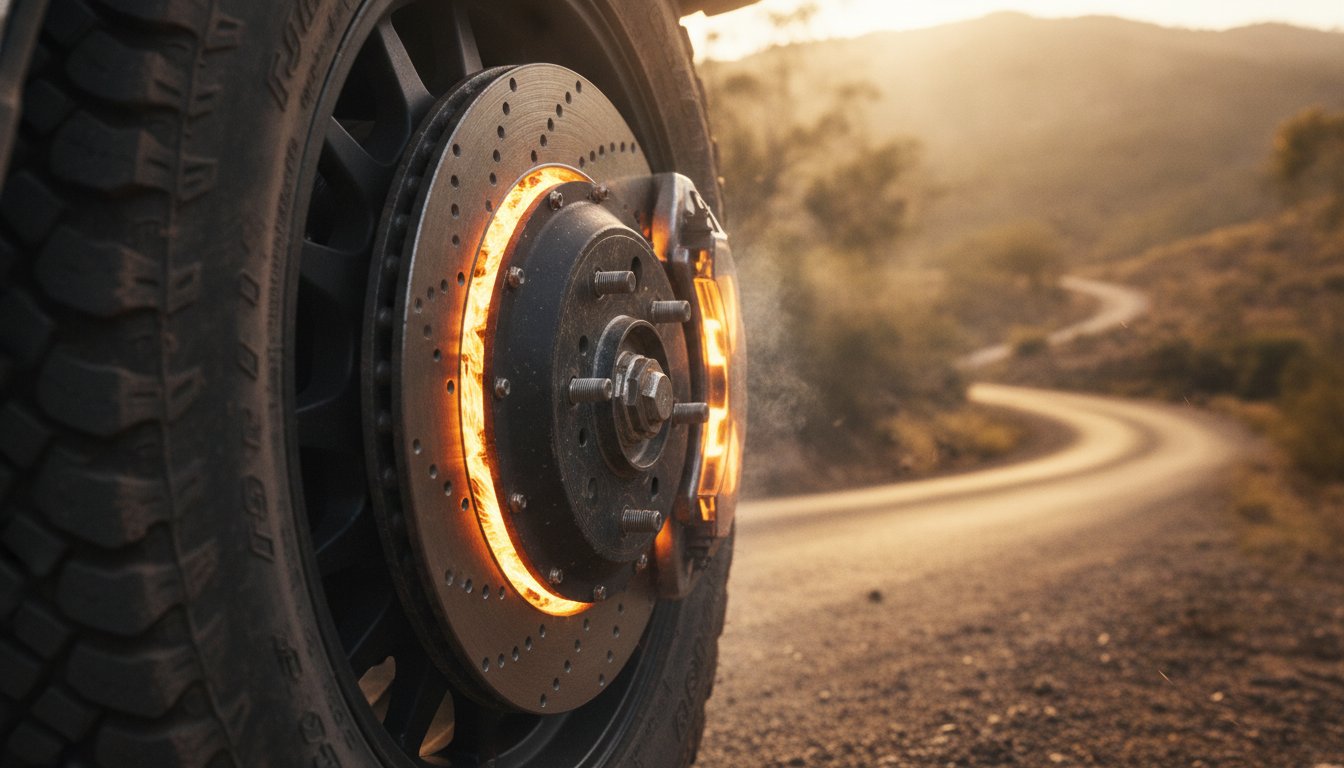
Is your vehicle’s stopping distance increasing under heavy load or during steep descents? Most Aussie drivers accept brake fade as an inevitable part of towing or off-roading. It isn't. It is a sign of component mismatch or system failure. Understanding all brake systems is the first step toward regaining control. Technical jargon shouldn't prevent vehicle maintenance. Professional results require precision parts. This guide delivers the technical knowledge required for safe operation in 2026 conditions.
This master guide provides a comprehensive technical breakdown of every major braking setup. You will learn to identify worn components and understand the mechanics of stopping power. We cover critical hardware from hydraulic lines to friction materials. Expect a clear, no-nonsense overview of the parts required to keep your vehicle compliant. From basic pad swaps to full system overhauls, the focus is on utility. Get the facts on high-quality spares and avoid unnecessary local mechanic markups.
Key Takeaways
- Master the mechanics of hydraulic force and thermal energy conversion to maintain peak braking efficiency.
- Evaluate the performance differences between disc and drum setups to optimise stopping power for specific Australian road conditions.
- Identify essential hardware within all brake systems, including high-wear brake pads and critical vacuum-assisted boosters.
- Prevent brake fade during heavy-duty towing by selecting appropriate performance upgrades and heavy-duty rotors.
- Utilise VIN or Rego data to ensure accurate part identification and rapid sourcing of high-quality mechanical spares.
Understanding All Brake Systems: The Mechanics of Stopping
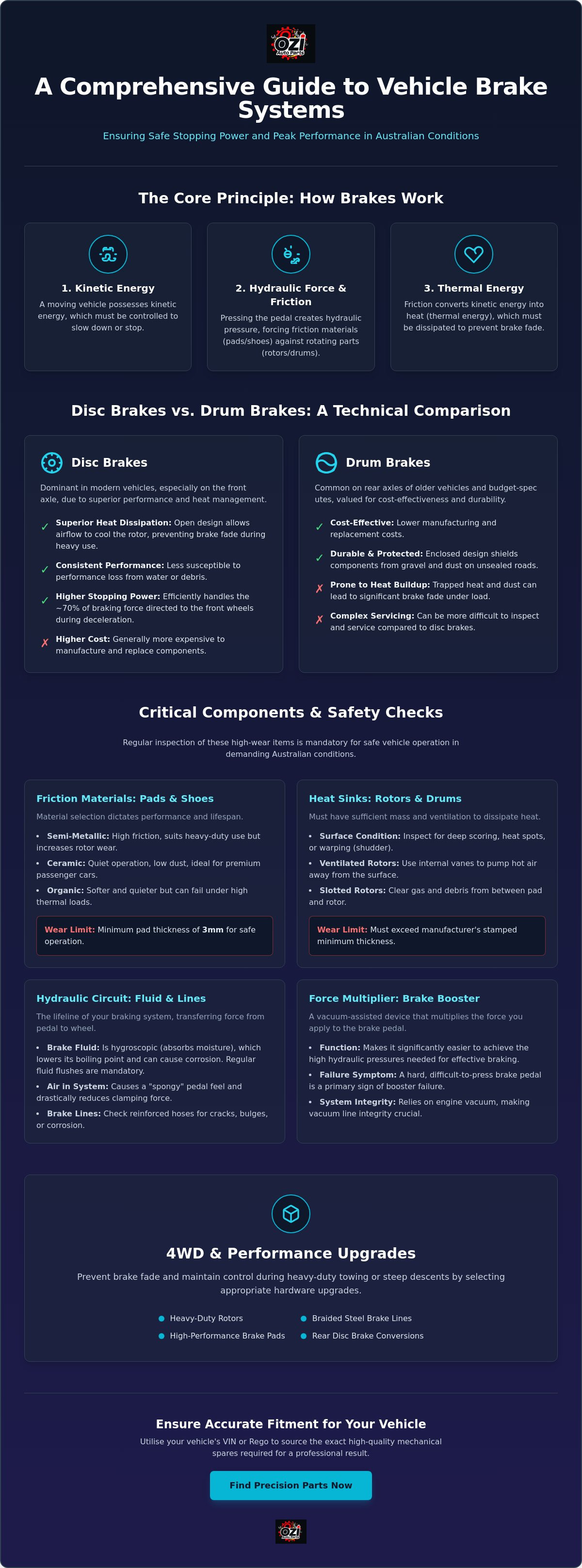
Braking is a fundamental energy conversion process. It transforms vehicle kinetic energy into thermal energy through friction. This heat must dissipate rapidly to prevent performance loss. The Mechanics of Stopping rely on a closed hydraulic loop. When the driver applies pressure to the pedal, the system multiplies this force to clamp friction materials against rotating components. Precision is mandatory. Even minor component wear compromises safety.
Effective maintenance of all brake systems requires understanding three primary categories. Disc brakes use calipers to squeeze pads against a rotor. Drum brakes use wheel cylinders to push shoes against the inner surface of a drum. Anti-lock Braking Systems (ABS) integrate electronic sensors and valves to prevent wheel lock-up during emergency deceleration. Australian conditions, specifically extreme ambient heat and abrasive red dust, accelerate component wear and thermal stress. High-performance hardware is essential for local reliability.
To better understand these technical concepts, watch this helpful video:
The Hydraulic Circuit: From Pedal to Caliper
The master cylinder acts as the primary pressure source. It converts mechanical pedal force into hydraulic pressure. Brake fluid transfers this energy through reinforced lines to the calipers. Because fluid is incompressible, the transfer is nearly instantaneous. Any air or moisture ingress causes a spongy pedal feel and reduced clamping force. Regular fluid flushes are mandatory for system integrity. The hydraulic brake circuit is the lifeline of vehicle safety.
Friction Materials: Pads, Shoes, and Rotors
Material selection dictates performance. Semi-metallic pads offer high friction across broad temperature ranges. They suit heavy-duty applications but increase rotor wear. Ceramic pads provide quieter operation and lower dust levels. These are ideal for premium passenger vehicles. Organic pads are softer but fail under high thermal loads. Rotors act as heat sinks. They must have sufficient mass and ventilation to dissipate heat during heavy braking. Understanding all brake systems includes monitoring these wear-intensive parts.
Critical wear limits for Australian vehicles:
- Minimum pad thickness: 3mm for safe operation.
- Rotor thickness: Must exceed the manufacturer's stamped minimum limit.
- Surface condition: Inspect for deep scoring, heat spots, or warping.
- Brake lines: Check for cracks, bulges, or corrosion.
Disc Brakes vs Drum Brakes: Comparing Modern Technologies
Automotive engineering has shifted toward disc brake dominance. Disc brakes provide superior heat dissipation. Their open design allows air to circulate freely across the rotor surface. This prevents thermal buildup. Drum brakes are enclosed. They trap heat and friction dust, which leads to performance degradation. For all brake systems operating in the Australian outback, managing this thermal load is the difference between a safe stop and total brake failure. Most modern SUVs and passenger cars now utilise all-wheel disc setups for consistent stopping power.
Drum brakes remain common on the rear axles of budget-spec utes and older vehicles. They are cost-effective to manufacture. Their enclosed nature offers some protection against gravel and debris on unsealed roads. However, they lack the rapid cooling capabilities required for high-speed deceleration or heavy towing. Modern Performance Upgrades often involve swapping rear drums for disc conversions to improve overall vehicle balance and safety integration.
Why Disc Brakes Dominate the Front Axle
Front brakes handle approximately 70% of the total braking force. Weight transfers forward during deceleration. This puts immense pressure on the front hardware. Disc brakes manage this load through advanced rotor designs. Ventilated rotors feature internal vanes to pump hot air away from the friction surface. Slotted rotors clear gas and debris. You must monitor for disc warp, which manifests as a distinct shudder through the steering wheel. Thinning rotors lose their ability to act as a heat sink. This increases the risk of fluid boiling.
The Persistence of Rear Drum Brakes
Rear drums persist due to their self-energising properties. As the shoes press against the drum, the rotation of the wheel pulls the shoe tighter. This provides a strong mechanical advantage, making them ideal for parking brake applications. Many 4WD owners appreciate the simplicity of drum handbrakes on steep inclines. The primary disadvantage is maintenance accessibility. Inspecting drum shoes requires removing the entire drum assembly. In contrast, disc pads are often visible through the wheel spokes for quick wear checks. If your rear shoes are nearing their wear limit, sourcing reliable brake system parts is essential for maintaining the correct front-to-rear braking bias.
- Disc Maintenance: Check pad thickness and rotor surface for scoring every 10,000km.
- Drum Maintenance: Adjust shoe clearance and inspect wheel cylinders for leaks annually.
- Wet Performance: Disc brakes shed water instantly; drum brakes can suffer from delayed response when submerged.
- System Compatibility: Ensure your master cylinder is rated for your specific disc or drum configuration.
Critical Components: From Brake Pads to Boosters
A vehicle's stopping power is only as reliable as its weakest component. While previous sections detailed the hydraulic circuit and basic friction types, the performance of all brake systems relies on specific mechanical hardware. Calipers and wheel cylinders act as the system's muscles. They convert fluid pressure into physical clamping force. Calipers squeeze pads against rotors, while wheel cylinders push shoes against drums. Precision matters. Even a slight misalignment in these components leads to uneven wear and reduced safety.
Proportioning valves serve as the system's regulator. These valves manage the pressure distribution between the front and rear axles. This prevents rear-wheel lock-up during sudden stops, especially when the vehicle is unladen. Modern setups often integrate this function into the ABS module, but many Australian 4WDs and utes still utilise standalone valves. Ensuring these valves are free from corrosion is vital for maintaining vehicle balance under heavy load.
Brake Boosters: The Unsung Hero of Power Braking
Brake boosters provide the vacuum assist required for modern driving. Without a functional booster, the force required to stop a 2.5-tonne vehicle would exceed human capability. A failing booster forces the driver to exert extreme physical pressure just to achieve basic deceleration. Common failure points include a ruptured internal diaphragm or a leaking vacuum check valve. You can identify a leak by listening for a distinct hissing sound when the pedal is depressed.
Diagnostic checks are simple. If your brake pedal feels rock-hard or requires excessive standing pressure to engage, the booster is likely compromised. Vacuum leaks also cause engine idle issues, as the booster is connected to the intake manifold. Finding direct replacement Brake Boosters for popular Australian makes ensures your system returns to factory-spec performance without modification.
Brake Pads and Rotors: The Essential Duo
Friction components are the primary wear items in all brake systems. Brake pads must be paired with rotors of compatible metallurgical composition. Installing high-performance pads on worn, thin rotors leads to rapid thermal glazing. This reduces the coefficient of friction and increases stopping distances. Cheap, low-grade pads often contain excessive fillers. These cause annoying squeals and high dust levels that can corrode alloy wheels. Always inspect rotors for thickness and surface integrity whenever pads are replaced.
Ozi Auto Parts stocks brake system parts for a vast range of Australian vehicles.
- Booster Check: Test for vacuum retention after the engine is switched off.
- Caliper Health: Ensure slide pins are lubricated to prevent sticking.
- Valve Function: Inspect for external fluid leaks around the valve body.
- Rotor Integrity: Look for blueing or heat spots indicating excessive thermal stress.
- Pad Wear: Replace pads before the friction material drops below 3mm.
4WD and Performance Upgrades: Beyond the Standard Setup
Standard OEM braking hardware typically meets urban safety requirements. However, Australian 4WD applications and heavy towing demand significant enhancements to all brake systems. Brake fade is a critical risk during long mountain descents or high-speed highway stops with a caravan. Standard pads overheat, causing the friction material to glaze and the pedal to feel soft. Upgrading to heavy-duty rotors provides the thermal mass needed to absorb and dissipate this heat effectively. Precision engineering ensures these rotors resist warping under sustained thermal stress.
Off-road environments introduce abrasive contaminants like red dust and mud. These particles accelerate friction wear and can seize caliper slide pins. Braided stainless steel brake lines offer a distinct advantage here. Unlike standard rubber lines, they do not expand under pressure, providing a firmer pedal and resisting damage from trail debris. This upgrade is foundational for drivers seeking consistent performance in remote locations.
Preparing Your 4WD for the Outback
Remote Australian touring requires mechanical resilience. Fitting larger tyres, such as 33-inch or 35-inch variants, increases the rolling mass the system must stop. This often exceeds the capacity of the factory vacuum assist. High-performance brake boosters are essential for modified 4WDs to maintain acceptable pedal effort. Without this increased assist, emergency stopping distances increase dangerously. Maintaining all brake systems at peak performance is a requirement for outback survival.
Essential remote spares include:
- Full set of front and rear heavy-duty brake pads.
- Sealed bottle of high-boiling point brake fluid.
- Spare vacuum hoses for the booster circuit.
Towing and Payload Considerations
Gross Vehicle Mass (GVM) upgrades are common for tourers carrying heavy canopies and gear. Increased weight places all brake systems under constant stress. Selecting pads with a high friction coefficient ensures consistent bite even at elevated temperatures. While electric brake controllers manage the trailer's deceleration, the tow vehicle hardware remains the primary safety net. Ensure your rotors are specifically rated for heavy-duty use to prevent thermal cracking under load.
Upgrade your vehicle's capability today with professional-grade 4WD upgrade parts designed for Australian conditions.
Sourcing Brake Parts Online: Ensuring Quality and Fitment
Online procurement is the most efficient method for managing vehicle maintenance costs. It eliminates middleman markups. For all brake systems, accuracy in part selection is the priority. Technical precision ensures safety. You must use your Vehicle Identification Number (VIN) or Registration (Rego) to verify component compatibility. This process removes guesswork. It guarantees that the hardware you receive matches your vehicle's specific hydraulic and mechanical requirements. Accurate fitment is mandatory for legal compliance and road safety.
Choosing an Australian specialist supplier provides a distinct advantage over general retailers. Local stockists understand the unique demands of the Australian climate and vehicle parc. They maintain inventory tailored to local utes, SUVs, and passenger cars. This expertise ensures you receive parts capable of withstanding extreme thermal loads and abrasive road conditions. Reliability is the foundation of every transaction.
Verifying Part Quality and Standards
Safety components must meet or exceed Original Equipment Manufacturer (OEM) specifications. Sub-par parts from unverified global marketplaces represent a significant risk. These components often lack the metallurgical integrity required for emergency stopping. Counterfeit friction materials can fail without warning. Ozi Auto Parts maintains a commitment to high-performance, reliable inventory. Every part in the catalogue undergoes rigorous quality assessment. We prioritise your safety by supplying only verified mechanical spares.
The Logistics of Safety: Fast Shipping Across Australia
Vehicle downtime is a liability. Efficient logistics are essential for rapid repairs. Australian-based stock arrives significantly faster than international alternatives. This reduces the time your vehicle spends off the road. Our dispatch systems are optimised for speed and accuracy. Expert support is available for technical enquiries before you finalise your order. This ensures you have the correct specifications for your specific brake configuration. Professional guidance prevents costly ordering errors.
Browse the full range of all brake systems and components at Ozi Auto Parts today.
- Compatibility: Use Rego search for 100% fitment accuracy.
- Standards: All inventory meets or exceeds OEM requirements.
- Dispatch: Fast nationwide delivery from Australian warehouses.
- Support: Technical assistance available for complex system enquiries.
- Value: Direct sourcing eliminates unnecessary mechanic part markups.
Optimise Your Vehicle's Stopping Power Today
Maintaining all brake systems requires more than just reactive pad replacements. It demands a technical understanding of hydraulic pressure, thermal dissipation, and vacuum assistance. This guide has detailed how specific components, from vacuum-assisted boosters to heavy-duty rotors, dictate your vehicle's performance on demanding Australian roads. Precision is mandatory. Whether you're preparing for a remote 4WD expedition or managing a daily commuter, component quality remains the primary safety factor. High-performance hardware prevents dangerous brake fade and ensures consistent deceleration under extreme load conditions.
Access professional-grade components through a specialist Australian online retailer. Ozi Auto Parts provides an extensive range of 4WD and performance upgrades with rapid nationwide delivery on all critical mechanical spares. Avoid the high costs of local markups and international shipping delays. Shop Premium Brake System Parts and Boosters at Ozi Auto Parts to restore your vehicle's factory-spec stopping power. Secure your safety with precision-engineered hardware that's built for local conditions. Restore your confidence behind the wheel with parts you can rely on.
Frequently Asked Questions
What are the main types of brake systems used in Australian cars?
Australian vehicles primarily utilise disc and drum hydraulic systems. Most modern passenger cars and SUVs feature four-wheel disc brakes for superior cooling. Many utes and older 4WD models retain rear drum setups due to their mechanical parking brake advantages. Anti-lock Braking Systems (ABS) are now a standard integration across all vehicle categories to prevent wheel lock-up during emergency deceleration.
How often should I replace my brake pads and rotors?
Component longevity depends on driving style and vehicle load. Brake pads typically require replacement every 30,000 to 70,000 kilometres. Rotors generally last through two sets of pads but must be measured for minimum thickness during every service. Heavy towing or frequent off-road use in all brake systems will accelerate this wear schedule significantly. Always inspect hardware if you notice squealing or reduced performance.
What are the signs of a failing brake booster?
A hard, unresponsive pedal is the primary indicator of booster failure. You may also notice a distinct hissing sound from the footwell when applying pressure. Because the booster relies on engine vacuum, a leaking diaphragm can cause irregular engine idling or stalling. These symptoms indicate a critical loss of power assist. Immediate replacement of the booster unit is required to restore safe operation.
Can I upgrade my standard brakes to a performance system for towing?
Upgrading to performance hardware is highly recommended for heavy-duty towing. Standard brakes often suffer from thermal glazing when descending steep grades with a caravan or boat. Installing slotted rotors and high-coefficient friction pads increases the system's heat capacity. This prevents brake fade and ensures consistent stopping power under maximum load. Braided lines further improve pedal feel during sustained braking events.
Is it safe to buy brake system parts online for a DIY repair?
Purchasing spares online is safe when using a specialist Australian supplier. Verifying compatibility via your Rego or VIN ensures the hardware matches your vehicle's technical specifications. DIY repairs should only be performed by individuals with the correct tools and mechanical knowledge. Always use components that meet or exceed OEM standards to maintain system integrity. Accurate part selection is the foundation of a successful repair.
What is the difference between disc brakes and drum brakes?
Disc brakes use a caliper to squeeze pads against an exposed rotor, providing superior heat dissipation. Drum brakes use internal shoes that push outward against a rotating drum. Discs are more effective for high-speed deceleration and wet conditions. Drums are often utilised on rear axles for their cost-efficiency and strong mechanical hold. Most modern Australian vehicles prioritise discs on the front axle where braking load is highest.
Why does my brake pedal feel spongy or soft?
Spongy pedals usually indicate air or moisture ingress within the hydraulic lines. Because air is compressible, pedal force is wasted compressing bubbles rather than moving the calipers. This can also result from a failing master cylinder or deteriorated rubber brake lines that expand under pressure. A full system bleed and fluid flush often resolve the issue. Persistent softness suggests a mechanical failure in the hydraulic circuit.
Does Ozi Auto Parts deliver brake components nationwide?
Ozi Auto Parts provides rapid nationwide delivery for all brake systems and mechanical spares. We dispatch critical components from Australian warehouses to minimise vehicle downtime. This includes everything from standard replacement pads to heavy-duty 4WD upgrade kits. Our logistics network ensures remote and metropolitan customers receive high-quality parts efficiently. Expert support is available to assist with technical enquiries before purchase.