
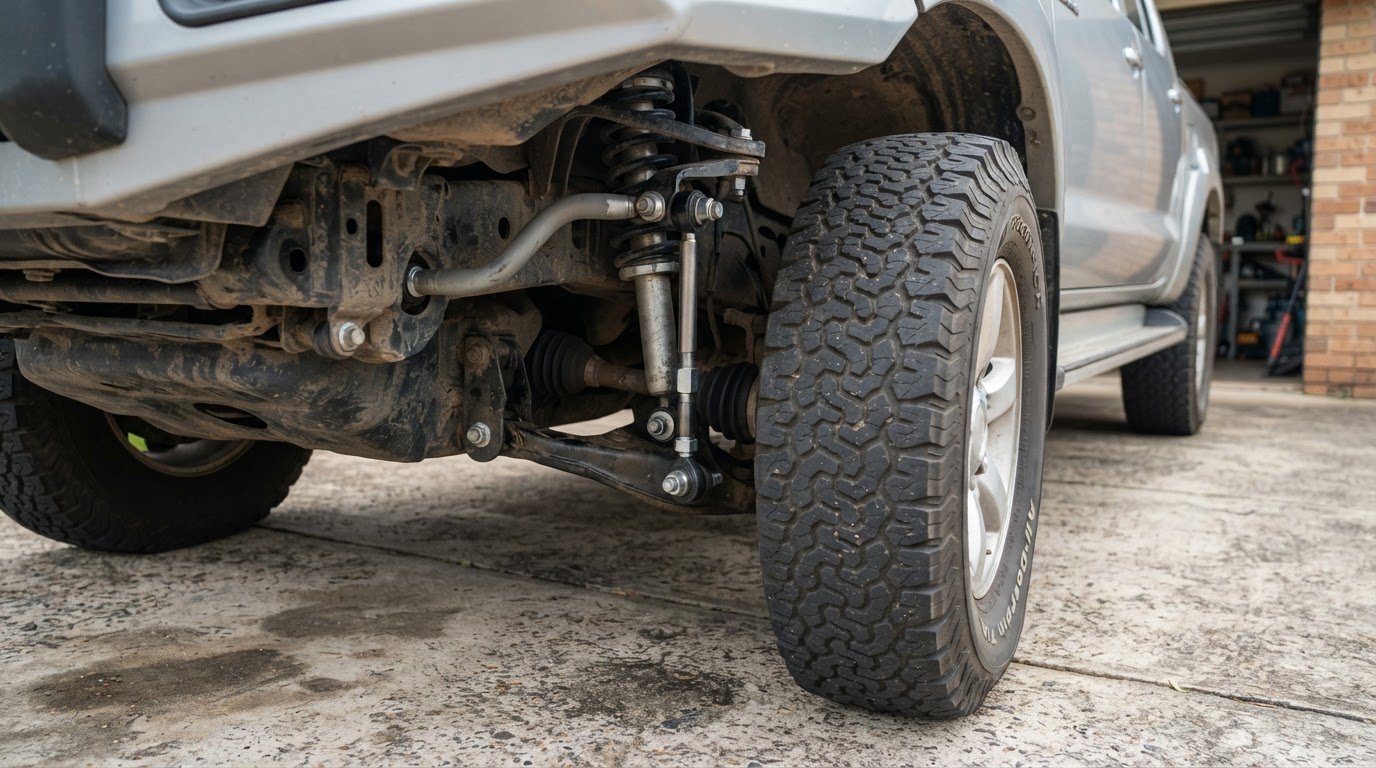
Link length affects more than fit. Adjustable sway bar links in Australia let you set the length to suit a vehicle’s suspension configuration and help address sway bar preload. End links connect the sway bar to the suspension, transferring forces between them.
When upgrading suspension or changing ride height, it’s natural to focus on whether a replacement link bolts up. Length matters too: an incorrectly adjusted link can leave the sway bar under preload at rest. A properly set-up sway bar can reduce body roll and improve handling.
This guide explains what end links do, how to measure for a replacement and how adjustable length affects preload and clearance. It also covers the specifications to consider when selecting links for an Australian suspension setup, including bolt diameter, eye-to-eye length and adjustment range.
Key Takeaways
- Measure eye-to-eye length from the centre of one bolt to the other, and record bolt diameter before selecting a replacement.
- Use the link’s minimum adjusted length when comparing measurements, then keep the adjustment within its listed range.
- Correct link length helps suit the suspension setup and address sway bar preload, particularly after a ride-height change.
- Check link and spacer clearance around nearby suspension components to avoid interference through suspension movement.
Adjustable link length and suspension setup
Adjustable links let you set end-link length to suit a vehicle’s suspension configuration. Choose based on measured dimensions and the adjustment range you need, not appearance alone.
Measuring end-link length
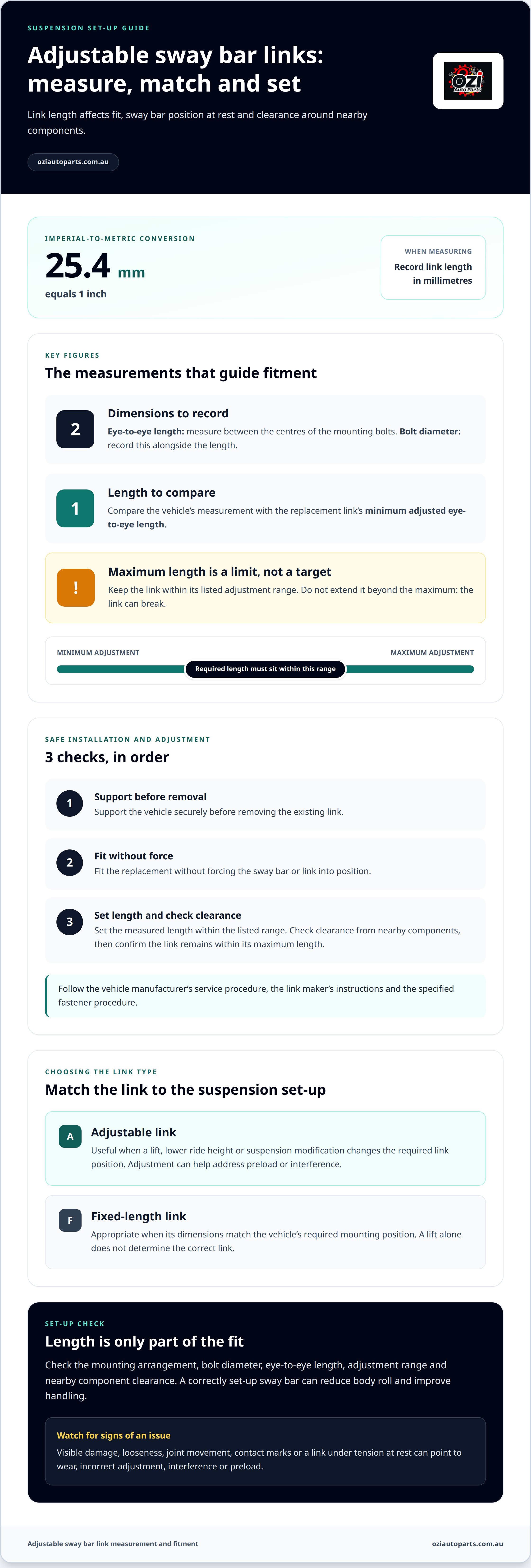
For an accurate eye-to-eye measurement, remove the existing link and measure between the centres of its mounting bolts. Record the result in millimetres, along with the bolt diameter. Compare the vehicle’s measurement with the replacement link’s eye-to-eye length at its minimum adjustment. One inch equals 25.4 millimetres, which helps convert older imperial measurements.
Maximum adjusted length
The listed maximum length is a limit, not a target. Do not extend an adjustable link beyond it, as the link can break. Match the required eye-to-eye length to the adjustment range, keeping the link within its specified minimum and maximum. This avoids choosing a link that reaches the required length only when overextended.
Lifted vehicles and fixed-length links
Are adjustable sway bar links better than fixed-length links for lifted vehicles? They’re useful when a lift changes the suspension geometry and the original link no longer suits the setup. A fixed-length link is appropriate when its dimensions match the vehicle’s required mounting position. Compare the required eye-to-eye length with the replacement’s adjustment range. A lift alone doesn’t determine the correct link.
Safe installation and adjustment
How do you install and adjust sway bar links safely? Follow the vehicle manufacturer’s service procedure and the link maker’s instructions. Check the following:
- Support the vehicle securely before removing the existing link.
- Fit the replacement without forcing the sway bar or link into position.
- Set the measured length within the listed adjustment range, then confirm clearance from nearby components.
Use the specified fastener procedure for the vehicle and link. After adjustment, confirm that the link remains within its maximum length.
What Do Sway Bar End Links Do?
A sway bar end link joins the sway bar to a fixed point on the suspension, transferring force between the components as the suspension moves. During cornering, the sway bar resists differences in movement between the vehicle’s left and right sides. The link connects these components so that force can transfer. Its fit and position influence how the bar works with the suspension.
A correctly set-up sway bar can reduce body roll and improve handling. The end link connects it to the suspension’s mounting points, but it is not the only factor: the bar and suspension configuration also affect the assembly. For example, changing ride height alters the relationship between the bar and its mounting point. The original link may then create preload or interfere with nearby components.
What are adjustable sway bar links, and when are they needed? They let you change link length to suit a vehicle’s suspension configuration. In Australia, adjustable sway bar links are useful when a ride-height change or suspension modification alters the required link position. They can help address preload or interference. A fixed-length link remains suitable when its dimensions match the setup.
For adjustable sway bar links in Australia, select by the vehicle’s mounting arrangement and the link’s required dimensions. Bolt diameter and eye-to-eye length help identify the relevant specification. Also consider nearby components and the space needed through suspension movement. For related component selection, review the available steering and suspension parts alongside the vehicle’s configuration.
Measure the distance between bolt centres in place. Remove the existing link if the mounting points cannot be measured in place. Select the bolt diameter and minimum-adjusted eye-to-eye length in millimetres. Choose spacers to maintain component clearance, and never exceed the maximum length, as the link can break.
Adjustable links and sway bar preload
Link length affects how the sway bar sits at rest and moves with the suspension. Correct adjustment can help address preload and potential interference.
Cost of adjustable sway bar links
Cost depends on vehicle fitment, bolt diameter, required eye-to-eye length and the link’s adjustment range. Compare these specifications first: a link that cannot reach the required length is not suitable. Construction and installation requirements also affect the decision, so assess the complete setup rather than choosing on price alone.
Adjustability alone does not establish road legality in Australia. Whether engineering approval or inspection applies depends on the vehicle, the suspension modification and the relevant state or territory requirements. There is no single approval answer for every setup across Australia, so assess the complete modification against the rules that apply locally.
Adjustment and wear symptoms
Inspect links for visible damage, looseness, joint movement or contact marks against nearby components. These signs may indicate wear, incorrect adjustment or interference. A link under tension at rest can also point to preload. Consider the vehicle’s suspension setup and the link’s position together. Changing the length without checking clearance can leave another issue unresolved.
A disconnected or damaged link interrupts force transfer between the sway bar and suspension. The vehicle’s handling response can change, including the sway bar’s contribution to controlling body roll. Avoid continuing to drive with a visibly damaged or disconnected link, particularly where handling feels altered. For suspension component options, review steering and suspension parts.
Adjustable sway bar end links can help address potential sway bar interference and preload on vehicles with lower ride heights. They provide a way to address fitment concerns when a lowered setup changes the bar’s position relative to nearby components.
Once sway bar preload is removed, adjustable end links allow quick adjustment of sway bars with multiple settings. After adjustment, check the link position and nearby clearance again. The selected setting should not leave the bar touching surrounding parts or put the link under tension at rest.
Ozi Auto Parts
Ozi Auto Parts supplies steering and suspension parts for vehicle setups, including those changed by suspension upgrades. Use the measurements and adjustment requirements above to guide your selection. Vehicle make and model, mounting dimensions, bolt diameter and required link length all help define the correct specification.
For broader suspension projects, Ozi Auto Parts also supplies 4WD upgrade parts, driveshafts and brake system parts. These categories support different parts of a vehicle build, but correct fitment still depends on the vehicle and component requirements. Keep the relevant vehicle details and measurements together when considering replacement parts.
Contact Ozi Auto Parts to discuss your steering and suspension parts requirements.
Plan Your Next Suspension Step
Choose adjustable sway bar links in Australia as part of a complete suspension plan, not as an isolated upgrade. Match the part to the vehicle and any suspension changes already made, then keep the intended setup consistent during installation. This helps avoid treating link adjustment as a substitute for resolving other fitment or clearance issues.
Before selecting parts, bring together the vehicle details and the purpose of the suspension change. That gives the discussion a clear direction, whether you’re replacing a component or refining an existing setup. Ozi Auto Parts supplies parts across several automotive categories, supporting customers working through broader vehicle upgrades. Contact Ozi Auto Parts about adjustable links to discuss the next step for your setup. Make the decision with your vehicle’s full configuration in view.
Frequently Asked Questions
How do I choose the correct length and type of adjustable sway bar link?
Match the link to your vehicle’s suspension configuration, mounting points and required adjustment range. Measure the existing link between bolt centres and record its bolt diameter. For example, after changing ride height, compare the required installed length with the replacement’s adjustment range. Choose a link that reaches that length without exceeding its listed maximum and allows clearance from nearby components.
What materials and brands of adjustable sway bar links are available in Australia?
Whiteline is a named sway bar link brand.